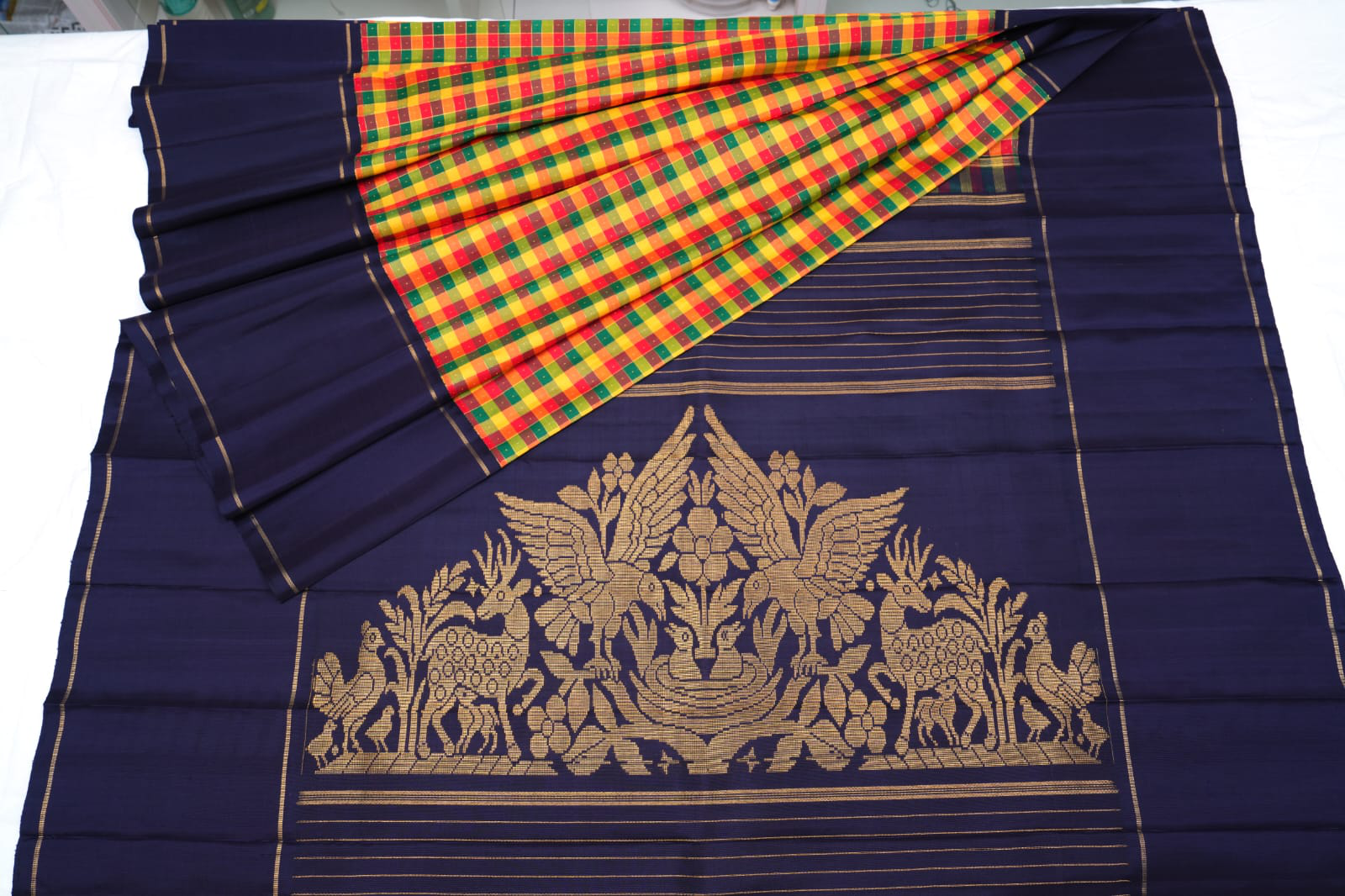
A singular masterpiece that resurrects the lost art of authentic Thirubuvanam weaving, crafted exactly as it was done 100 years ago.
This is not just a saree. It is the revival of forgotten techniques, the preservation of heritage, and the embodiment of centuries-old craftsmanship in its purest form.
A labor-intensive journey spanning over 30 days, involving multiple skilled artisans and four distinct stages
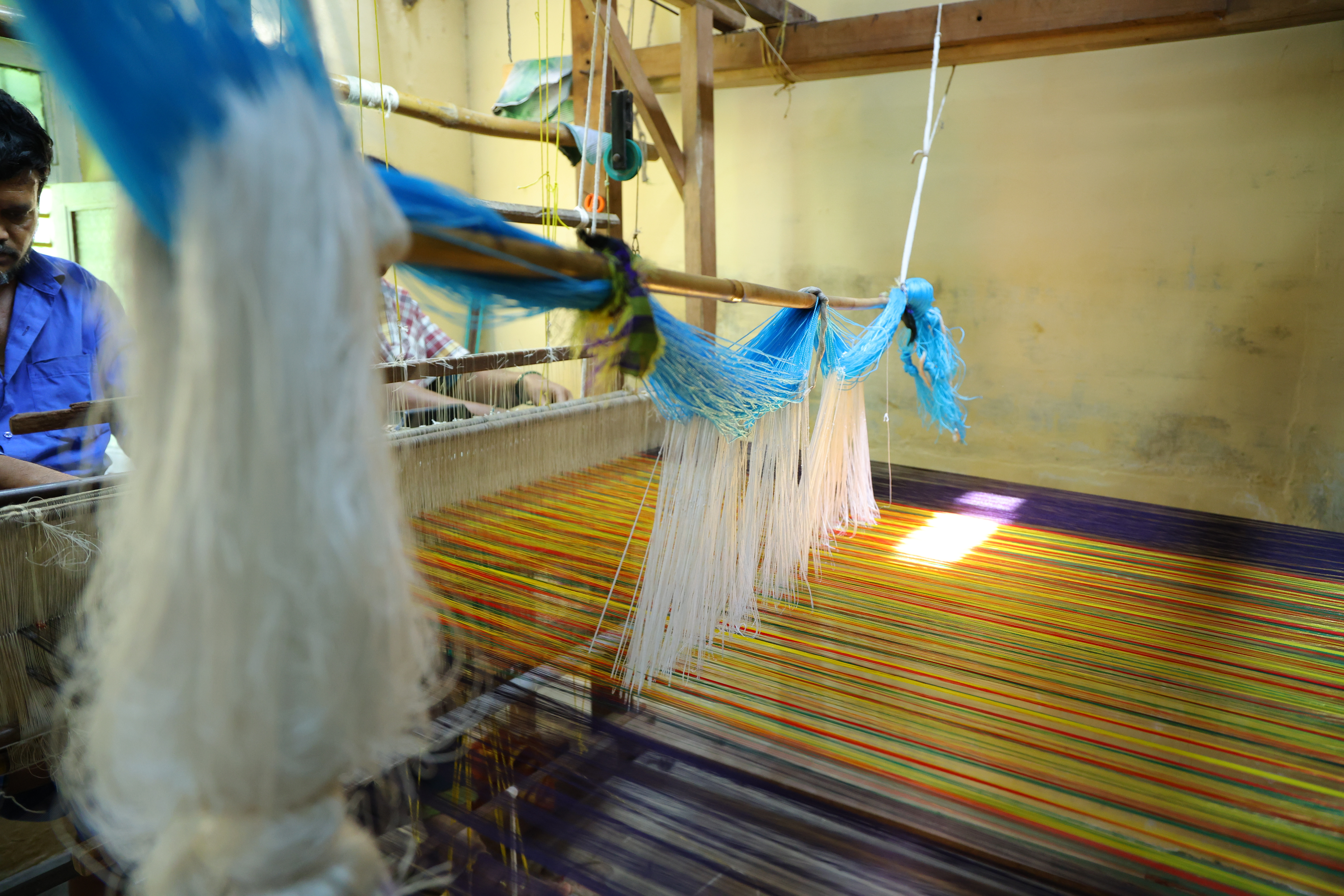
Thousands of silk threads are carefully measured and wound onto a large wooden warping drum to achieve the required 6-yard length and proper density.
Warp threads are coated with rice starch paste, strengthening the delicate silk threads and giving the fabric its characteristic stiff feel.
Silk yarns are dyed separately - body yarn in base colors, border yarn in contrasting shades, and pallu yarn to match the border or create another contrast.
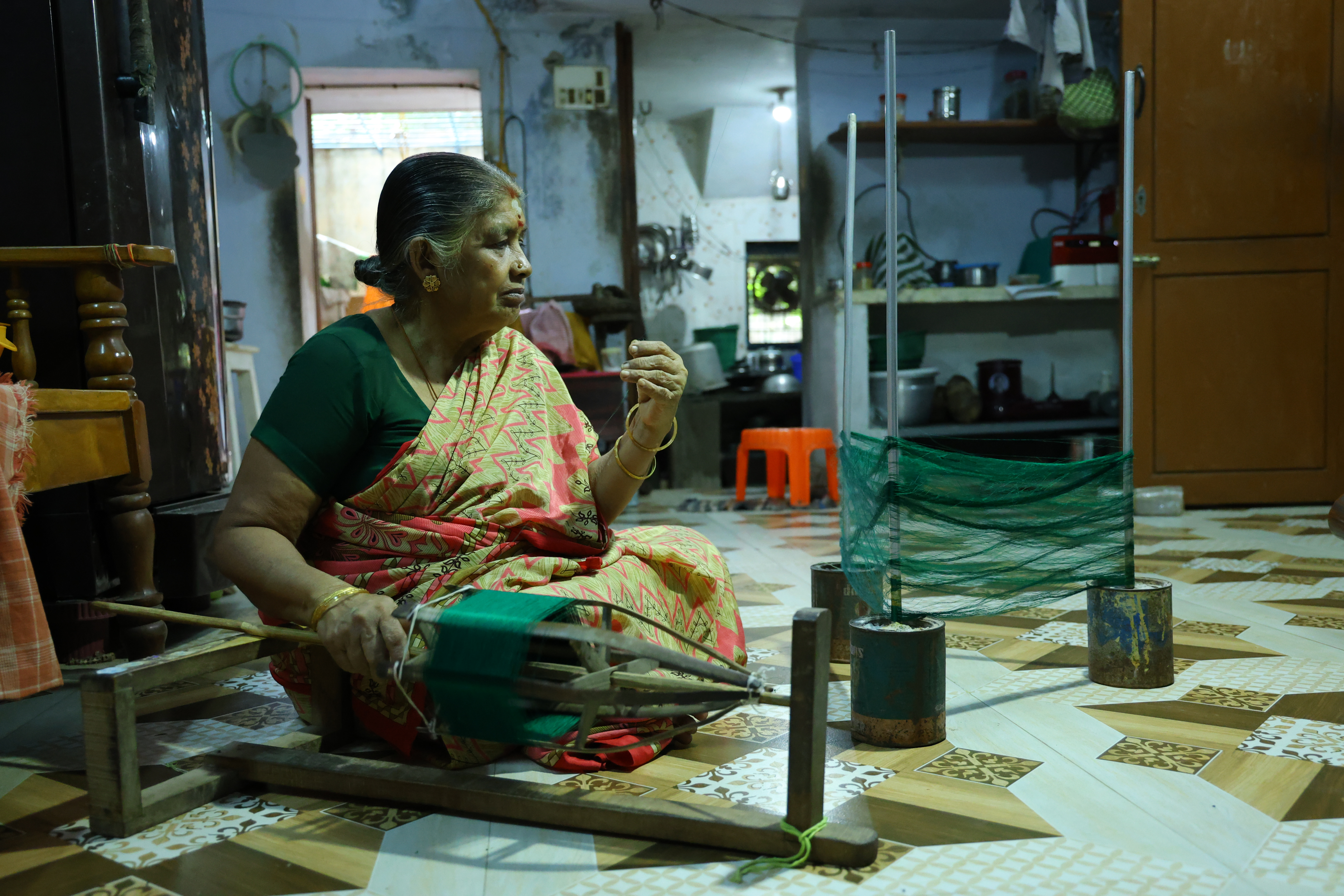
The sized and dyed warp beam is mounted, with each thread painstakingly drawn through heddle eyes and reed - a highly skilled process requiring expert hands.
Before modern Jacquard systems, all patterns were created manually using "Junku" technique for body and border, and "Adai" technique for the elaborate pallu.
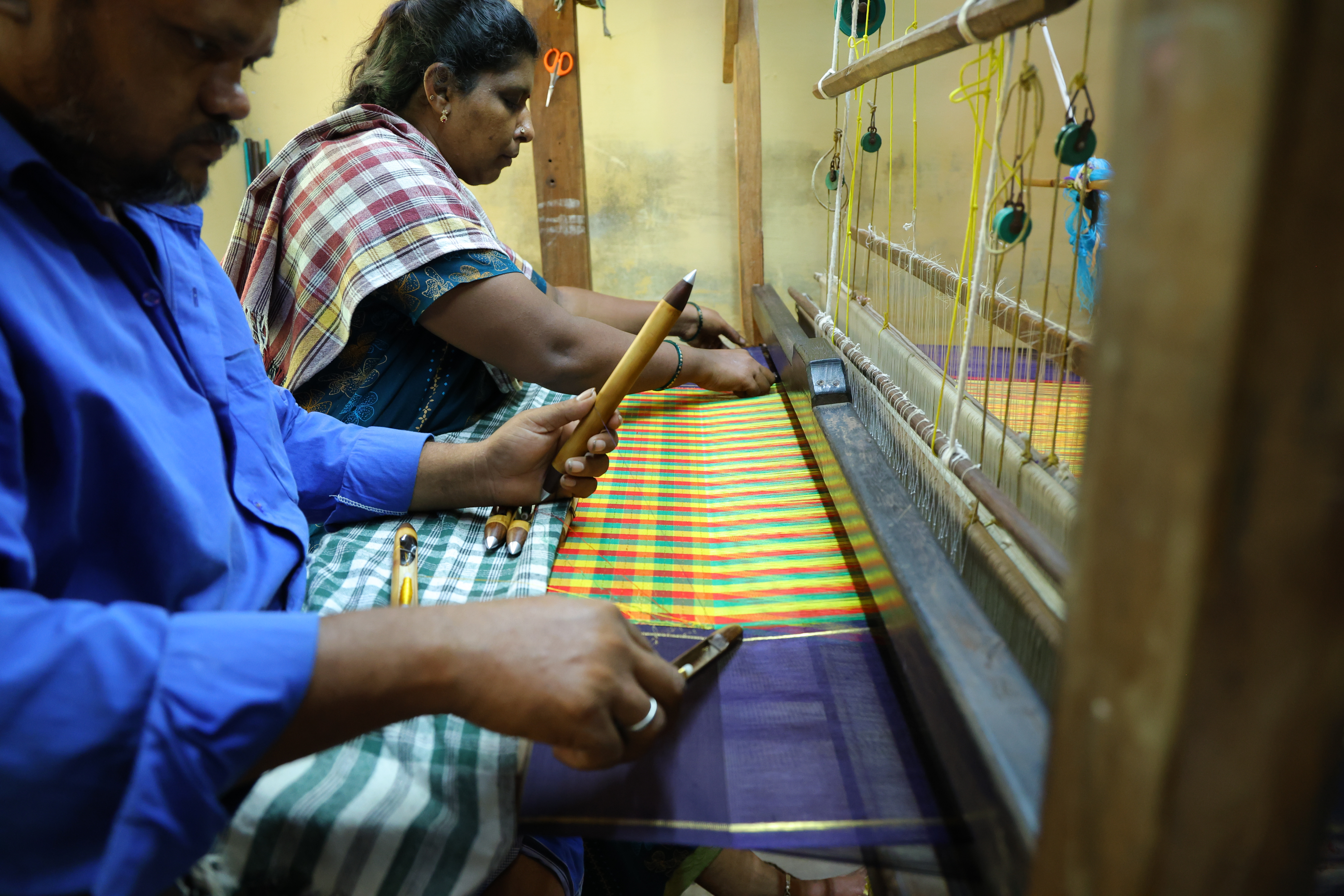
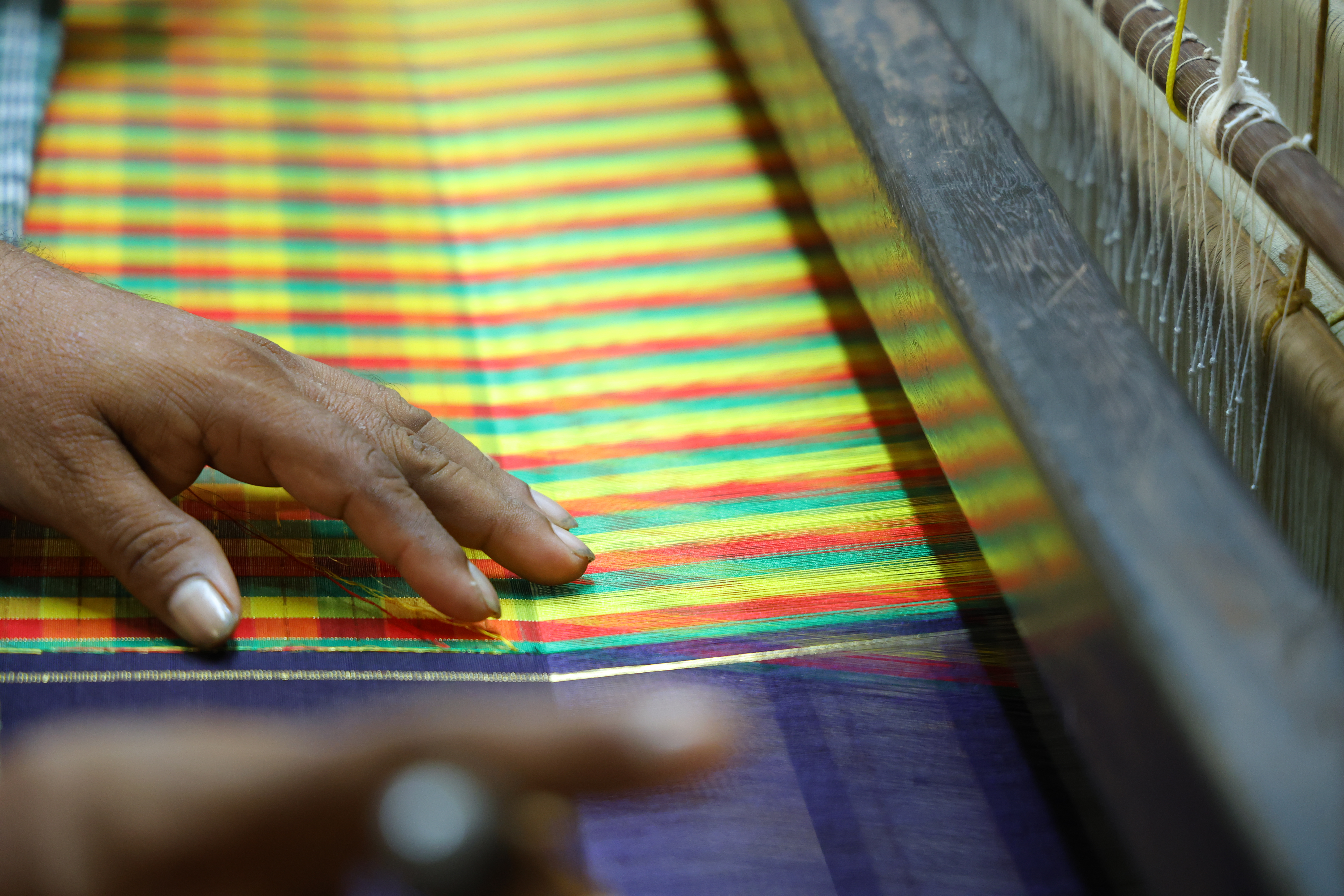
Highly skilled weavers work in pairs on frame looms, operating treadles with their feet while throwing shuttles with practiced precision.
The signature technique where differently colored weft threads are manually interlocked at border junctions, creating sharp, clean lines without any single thread crossing between sections.
The most intricate work featuring elaborate zari designs - peacocks, temple motifs - where every thread placement requires absolute precision and artistic vision.
Every inch is examined for weaving errors, broken threads, or color inconsistencies - quality control that ensures only perfection reaches the wearer.
The finished saree is folded in the natural, specific traditional manner - the same fan folding technique used when loading the beam during weaving.
Key differentiators that set authentic Thirubuvanam sarees apart from any other silk in Tamil Nadu
While maintaining their legendary durability, Thirubuvanam sarees offer a uniquely softer feel compared to any other silk saree in Tamil Nadu.
The motifs carry a distinctly different, more ancient aesthetic that reflects the rich Chola heritage and centuries of artistic evolution.
Connoisseurs recognize the particularly intricate and robust zari borders that demonstrate the pinnacle of traditional metallic thread artistry.
A 650-year tradition revived in its authentic form
Thirubuvanam, a small town near the temple city Kumbakonam in Tamil Nadu, is one of the three major silk weaving hubs in the state, alongside Kanchipuram and Aarani.
Its silk weaving tradition was established by master weavers who migrated from Gujarat some 650 years ago, bringing with them the secrets of silk that would transform this humble town into a center of textile excellence.
The signature product of Thirubuvanam is the pure silk saree, distinguished by three defining characteristics that make it legendary.
The defining feature involving weaving the body, border and pallu with separately dyed yarns of different colors, then interlocking them to create sharp, zari-edged designs without any gap.
Use of genuine gold and silver thread for intricate patterns used in body, border and pallu, creating the lustrous beauty that has made these sarees treasured heirlooms.
Known for their heavy weight, dense weave, and exceptional durability, often lasting for generations with traditional motifs like temple borders, peacocks, and parrots.
This is more than an acquisition. It is the preservation of a dying art, the support of master craftsmen, and the ownership of a singular piece that represents the resurrection of forgotten techniques. Only one exists. Once it finds its home, this particular fusion of past and present can never be recreated exactly the same way again.
Certificate of authenticity • Detailed documentation • Worldwide shipping